What Is a 50ohm RF Coaxial Cable?
Understanding the Basic Structure of a Coaxial Cable
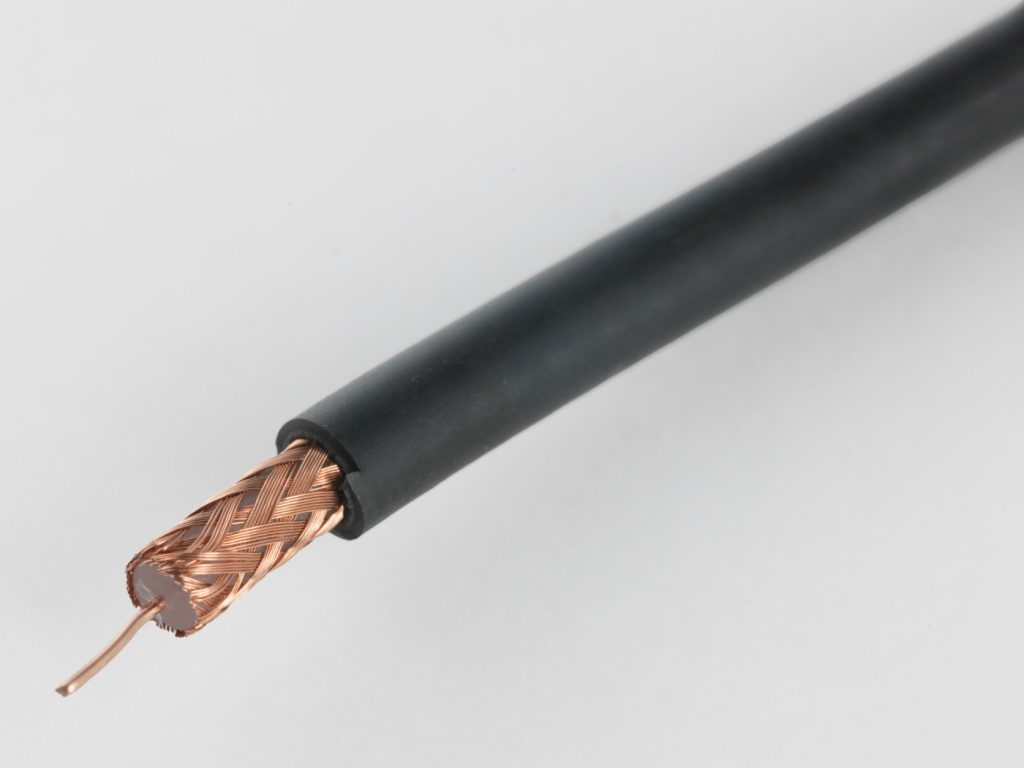
A coaxial cable is designed to carry high-frequency electrical signals while minimizing interference from external sources. Its construction consists of several layers that work together to maintain signal integrity.
| Component | Function |
| Center Conductor | Carries the RF signal |
| Dielectric Insulator | Maintains spacing and impedance |
| Shielding Layer | Protects against electromagnetic interference |
| Outer Jacket | Provides mechanical protection |
The term “coaxial” refers to the shared axis between the center conductor and the outer shielding layer. This design allows signals to travel efficiently while reducing unwanted noise.
What Does 50 Ohm Mean?
The “50 ohm” in a 50ohm RF Coaxial Cable refers to its characteristic impedance. Impedance is a measure of how the cable resists alternating current signals, particularly at radio frequencies.
Unlike standard electrical resistance, impedance considers the behavior of high-frequency signals as they travel through the cable. Matching impedance across the entire RF system helps ensure efficient signal transfer and minimizes signal reflections.
Why Is 50ohm RF Coaxial Cable the Industry Standard?
The Engineering Balance Between Power and Signal Loss
The 50-ohm standard emerged as a practical engineering compromise. Historically, RF engineers discovered that lower impedance cables could carry more power, while higher impedance cables offered lower signal loss.
A 50ohm RF Coaxial Cable provides a balance between these two requirements:
- Good power handling capability
- Acceptable signal attenuation
- Broad compatibility with RF equipment
- Consistent system performance
This balance made 50Ω the preferred choice across many RF applications.
Why Most RF Equipment Uses 50 Ohms
Many RF systems are designed around the 50-ohm standard. This includes:
- RF transmitters
- RF receivers
- Base station equipment
- Signal generators
- Network analyzers
- Telecommunications infrastructure
Using a common impedance standard simplifies system integration and helps maintain consistent RF performance. In wireless communication networks, maintaining impedance continuity across cables, connectors, and equipment is essential for reliable signal transmission. Learn more about Petracarbon’s Wireless Telecommunications solutions and the technologies supporting modern RF communication systems.
50 Ohm vs 75 Ohm Coaxial Cable
A common question is how 50-ohm cable compares with 75-ohm cable.
| Feature | 50 Ohm | 75 Ohm |
| RF Communications | Excellent | Limited |
| Power Handling | Higher | Lower |
| Signal Loss | Moderate | Lower |
| Broadcast Video | Less Common | Common |
| RF Testing | Industry Standard | Rare |
For most RF Products and telecommunications applications, 50 ohm remains the preferred choice.
How Does 50ohm RF Coaxial Cable Work?
How RF Signals Travel Through the Cable
RF signals travel as electromagnetic waves through the space between the center conductor and the shield. The cable geometry controls how the signal propagates while helping maintain stable impedance throughout the transmission path.
The shielding layer prevents external interference from affecting the signal while also containing the signal within the cable itself.
The Importance of Impedance Matching
Impedance matching is one of the most important concepts in RF engineering. Ideally, the source, cable, and load should all have matching impedance values.
A typical RF signal path may look like:
RF Equipment → RF Connector → 50ohm RF Coaxial Cable → RF Device
When all components share the same impedance, signal transfer becomes more efficient.
What Happens When Impedance Is Mismatched?
Impedance mismatches can create several performance issues:
- Signal reflections
- Reduced power transfer
- Increased insertion loss
- Lower measurement accuracy
For this reason, selecting compatible RF Connectors and cable assemblies is critical for maintaining system performance.
How Does 50ohm RF Coaxial Cable Affect RF Performance?
Impact on Signal Quality
Signal quality depends heavily on maintaining stable impedance throughout the system. A properly selected 50ohm RF Coaxial Cable helps minimize signal reflections and maintain consistent transmission characteristics.
This becomes particularly important in high-frequency applications where even small losses can affect system performance.
Impact on System Reliability
Reliable signal transmission contributes directly to overall system stability. Whether used in wireless infrastructure or RF testing environments, maintaining proper impedance helps reduce troubleshooting and performance inconsistencies.
For additional insights into RF performance, refer to How Coaxial Cable Shielding Reduces Signal Loss and Enhances RF Performance.
Impact on High-Frequency Applications
As frequencies increase, cable performance becomes even more critical. High-frequency signals are more sensitive to losses, connector quality, and impedance variations.
Applications that commonly rely on 50ohm RF Coaxial Cable include:
- Telecommunications networks
- Wireless communication systems
- RF laboratories
- Industrial RF monitoring systems
The Role of RF Connectors in a 50Ω System
Why RF Connector Selection Matters
An RF Connector is not simply a mechanical attachment. It forms part of the complete RF transmission path.
If the connector impedance does not match the cable impedance, signal reflections may occur even if the cable itself is properly selected.
Common Causes of RF Performance Loss
Several factors can reduce RF system performance:
- Poor connector installation
- Damaged cable assemblies
- Improper RF Connector selection
- Excessive cable bending
These issues often become more noticeable at higher frequencies.
Maintaining Signal Integrity Across Connections
Maintaining signal integrity requires both quality cable assemblies and properly matched connectors.
For a deeper understanding of connector selection, see RF Connector Types and Their Impact on Performance in High-Frequency Applications.
When Should You Choose Flexible RF Coaxial Cable?
Advantages of Flexible RF Coaxial Cable
A Flexible RF Coaxial Cable offers several practical installation benefits.
These cables are commonly selected when:
- Installation space is limited
- Equipment requires frequent movement
- Routing paths contain multiple bends
Flexible designs simplify installation while helping maintain signal performance.
Applications That Benefit from Flexible Cable Designs
Flexible RF Coaxial Cable solutions are often used in:
- Equipment cabinets
- Telecommunications racks
- RF testing environments
- Portable communication systems
The ability to route cables efficiently can simplify system design and maintenance.
Performance Considerations
When selecting a Flexible RF Coaxial Cable, engineers typically evaluate:
- Frequency range
- Mechanical durability
- Connector compatibility
- Environmental conditions
These factors help determine long-term suitability for the intended application.
How to Choose the Right 50ohm RF Coaxial Cable
When selecting a 50ohm RF Coaxial Cable, engineers and buyers should evaluate several key factors, including frequency range, shielding effectiveness, cable flexibility, connector compatibility, and environmental durability. These specifications directly influence signal performance, installation requirements, and long-term reliability.
Before making a selection, it is important to consider the operating frequency of the system, whether a Flexible RF Coaxial Cable is needed for routing constraints, which RF Connector will be used, the installation environment, and the level of shielding required to protect against interference.
Final Considerations for Selecting 50ohm RF Coaxial Cable
A 50ohm RF Coaxial Cable remains the industry standard because it provides an effective balance between power handling, signal transmission efficiency, and broad equipment compatibility. From telecommunications infrastructure and RF Products to Coaxial Probe and Miniature Coax Spring Probe applications, maintaining proper impedance is essential for reliable performance.
Understanding how 50-ohm systems work, how RF Connectors influence signal quality, and when to choose a Flexible RF Coaxial Cable helps engineers and buyers make more informed decisions. For more information about RF solutions and engineering products, visit the Petracarbon homepage or the Contact page.