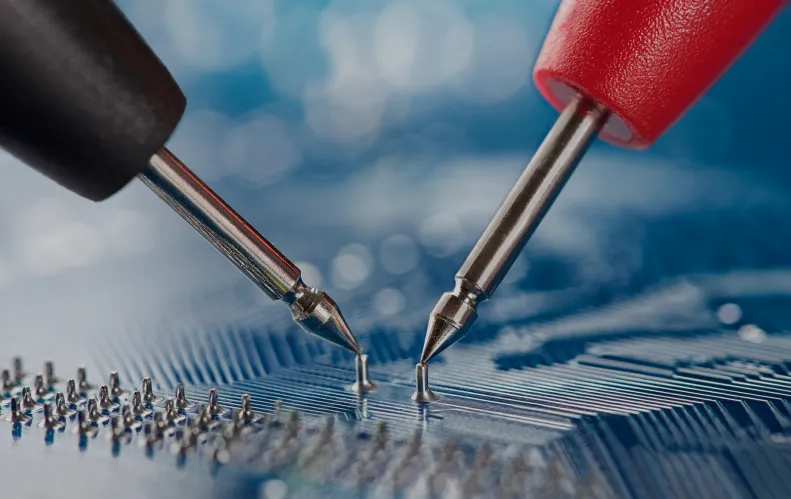
In modern electronics manufacturing, Interface Probes play an important role in maintaining reliable electrical connections inside in-circuit test systems. As circuit boards become denser and testing requirements more precise, stable probe interfaces help ensure signals travel accurately between automated testers and ICT fixtures.
Petracarbon supplies probe components used in ICT environments, including PCB Test Probes, Spring Contact Probes, Board Test Probe components, and High Current Probes. The company operates as a trading supplier of these semiconductor parts and does not manufacture the probes or perform testing services.
What Are Interface Probes in an In-Circuit Test System?
How Interface Probes Connect Testers to Fixtures
Within an ICT environment, Interface Probes form the connection layer between the automated test system and the fixture that contacts the printed circuit board. These probes transfer electrical signals from the tester interface board to the fixture wiring, which eventually routes the signals to PCB Test Probes touching the circuit board.
This connection layer must remain stable throughout repeated testing cycles. If the interface probe connections are unstable or misaligned, signals may fluctuate during testing. This can cause inaccurate readings or repeated test cycles, affecting manufacturing efficiency.
Interface Probes vs PCB Test Probes
Although both probe types exist within the same fixture, they serve different purposes.
| Probe Type | Role in ICT |
| Interface Probes | Connect tester interface board to fixture |
| PCB Test Probes | Contact the PCB test pads |
| Spring Contact Probes | Provide compression and mechanical compliance |
The signal path inside a fixture typically follows this sequence:
Tester → Interface Probes → Fixture wiring → Spring Contact Probes → Board Test Probe → PCB
Each probe layer must maintain consistent electrical contact. Even if PCB Test Probes function perfectly, poor interface connections can still cause unreliable in-circuit test results.
Why Stable Interface Probes Matter in In-Circuit Test
Preventing Intermittent Test Failures
One of the most common problems in ICT environments is intermittent testing caused by unstable probe connections. If Interface Probes lose consistent compression or alignment, electrical signals may fluctuate during measurement.
This instability can lead to false failures or inconsistent readings. Operators may need to retest boards multiple times before obtaining stable results. Over time, repeated testing slows production throughput and increases operational costs.
Stable interface probe connections help maintain consistent electrical continuity between the tester and fixture. This reliability improves testing accuracy and reduces unnecessary retesting cycles.
Maintaining Signal Integrity Across ICT Fixtures
Signal integrity becomes increasingly important as modern circuit boards include smaller components and denser layouts. Test signals travel through multiple layers of wiring and probe contacts before reaching the PCB.
Properly designed Interface Probes help maintain stable contact resistance and ensure signals remain consistent throughout the testing process. When combined with well-designed Spring Contact Probes and PCB Test Probes, the entire probe system supports accurate and repeatable in-circuit test measurements.
For further insight into probe reliability in ICT systems, you may refer to Petracarbon’s article on Maximizing Test Accuracy with Board Test Probes and Spring Contact Probes.
How Interface Probes Work with Spring Contact Probes
The Probe Network Inside an ICT Fixture
An ICT fixture typically contains hundreds of probes working together. These probes form a network that transfers signals from the tester to the PCB test points.
| Component | Function |
| Interface Probes | Connect tester interface board to fixture |
| Fixture Wiring | Distributes signals across fixture |
| Spring Contact Probes | Maintain compression and compliance |
| PCB Test Probes | Contact test pads on the board |
Each component must function reliably to maintain a stable test environment.
Mechanical Compliance in Probe Systems
Spring Contact Probes are designed with internal springs that allow controlled compression during testing. This feature helps compensate for slight variations in PCB height or fixture alignment.
By maintaining consistent pressure on the test pads, Spring Contact Probes ensure that Board Test Probe contacts remain stable. When combined with properly aligned Interface Probes, the entire system delivers reliable signal transmission from tester to board.
Selecting Interface Probes for ICT Fixtures
Important Specifications to Consider
When engineers evaluate Interface Probes for fixture design, several technical specifications are commonly reviewed.
| Specification | Importance |
| Stroke Length | Determines probe compression range |
| Spring Force | Maintains consistent electrical contact |
| Current Rating | Supports electrical load requirements |
| Cycle Life | Indicates durability during repeated testing |
Understanding these parameters helps ensure compatibility between probe components and the fixture structure.
Compatibility with ICT Test Platforms
Many electronics manufacturers use automated ICT systems such as Keysight Medalist i3070, Keysight i1000, or Teradyne Teststation platforms. Probe components used in fixtures must align with the interface boards designed for these systems.
Although Petracarbon does not perform testing services, the company supplies probe components used in fixtures designed for these platforms.
You may also find additional context in Petracarbon’s related article on In-Circuit Test Fixtures for Keysight and Teradyne Systems.
Interface Probes in Singapore’s Electronics Manufacturing Sector
Singapore remains a key hub for electronics and semiconductor manufacturing in Southeast Asia. Production facilities rely on accurate testing to ensure product quality before final assembly.
Stable probe connections are therefore essential. Reliable Interface Probes help ensure signals from the tester reach the PCB without interruption. Combined with PCB Test Probes and Spring Contact Probes, these components help maintain consistent ICT performance in production environments.
Companies requiring probe component sourcing often work with specialised engineering suppliers. As a Singapore-based engineering trading company, Petracarbon provides probe components used in ICT environments.
For enquiries about probe components and other engineering solutions, visit the Contact page.